As you might have noticed, this blog is no longer active.
But the occasion of the 2012 Sight & Sound "Greatest Films of all time" poll was to good to be passed up. The poll, which is only conducted every 10 years, is considered to be the most important of its kind because every important film critic on the planet is contributing to its result. The latest poll, which was published in September, brought one major shift: "Citizen Kane", which won the last five polls, has been replaced at the top by "Vertigo" and has been degraded to Number Two. This, of course, has led to numerous discussions among critics and film buffs alike whether Hitchock's masterpiece really is better than Welles's miracle. And of course the raison d'etre of polls itself has been questioned once again.
Truth is, every serious film lover on the planet laughs at the impossible task of reducing film history to a mere 10 films when there are so many great ones to choose from by now and - even more important - the greatest pleasure is to be had not with the canonical classics but with the personal favourites, the films you grew up with, the imperfect film maudits or the newly discovered obscurities. Nevertheless, lists are huge fun and the extended results - which can be found here - do provide a valuable checklist for important films one has (or has not) already seen. And since not it not only fun to read about the lists of others but also to come up with an own one, what follows is my list of the greatest films ever made, a mixture of films I absolutely love and films I deem essential:
Sunrise: A Song of Two Humans (USA 1927, F.W. Murnau)
Citizen Kane (USA 1941, Orson Welles)
Letter from an unknown Woman (USA 1948, Max Ophüls)
Sunset Boulevard (USA 1950, Billy Wilder)
À bout de souffle (France 1960, Jean Luc-Godard)
La Dolce Vita (Italy 1960, Federico Fellini)
L'année dernière à Marienbad (France 1961, Alain Resnais)
Il Gattopardo (Italy 1963, Luchino Visconti)
I am Twenty (Russia 1964, Marlen Khutsiyev)
2001: A Space Odyssey (UK 1968, Stanley Kubrick)
Consider this the final entry on this blog but not the last word...
August 23, 2012
July 01, 2012
Blog no longer updated!
Dear readers,
since I am now writing film reviews regularly for the German-language online newspaper DrehPunktKultur I will no longer have the time to write this blog.
Thanks for your support!
Andreas
May 06, 2012
Barbara (Germany 2012)
Das Kino des
Christian Petzold – das ist der Augenblick, bevor wir aufwachen. So hat es ein Kritikerkollege einmal sehr treffend beschrieben. Es versetzt uns in einen
tranceartigen Zustand, in dem man stets die Wirklichkeit des eben Gesehenen
anzweifelt. Wie kaum ein anderer zeitgenössischer Regisseur versteht er es, mit
einfachsten Mitteln Atmosphäre zu erzeugen und eine Geschichte durch Stimmungen
zu erzählen. Verbunden mit seinem genauen Blick auf seine Charaktere ist er –
in Anspielung auf eine Szene in seinem neuen Film – so etwas wie der Rembrandt
des deutschen Kinos.
Sein neuer Film „Barbara“ erzählt von einer Kinderärztin, die von Berlin in die Provinz strafversetzt wurde, da sie einen Ausreiseantrag in den Westen gestellt hat. Ihrem neuen Chef Andre und den Kollegen gegenüber bleibt sie vorerst distanziert und verschlossen. Ihr Geliebter aus dem Westen kommt gelegentlich für heimliche Treffen in die DDR um ihre Flucht zu organisieren. Als die Ausreißerin Stella in das Krankenhaus eingeliefert wird, kümmert sie sich gemeinsam mit Andre intensiv um das Mädchen. Dabei lernen sich beide langsam besser kennen. Barbara beginnt an sich und ihren Plänen zu zweifeln. Einerseits möchte sie weg aus dem Land, das keine Zukunft für sie bietet, andererseits wird sie plötzlich gebraucht…
„Barbara“ ist Petzolds bisher emotionalster Film – was jedoch nicht bedeutet dass der Film nicht wie gewohnt kühl und reduziert inszeniert ist. Ein Liebesfilm zwar und einer der einen durchaus berührt, aber eben auf eine ganz und gar unsentimentale Art. Diese Widersprüche sind es auch was Petzolds Film so faszinierend machen. Die Strenge und emotionale Abgestumpftheit der Charaktere einerseits, die Zärtlichkeit und der inhärente Humanismus andererseits. Dieser zeichnet auch den Regisseur aus der zwar die Gesellschaft als eine konstante Bedrohung darstellt, jedoch ein großes Mitgefühl für seine Figuren zum Ausdruck bringt. Der Schauplatz der ehemaligen DDR wurde hierbei zwar bewusst gewählt, im Grunde ist die Geschichte aber nicht an einen Ort und eine Zeit gebunden. Erfrischend ist auch dass die DDR weder als heruntergekommener Ort der Unterdrückung noch als schrullig-heitere Idylle dargestellt wird.
„Barbara“ ist das Reifezeugnis von Christian Petzold, welches er bereits in Form des Regiepreises bei der Berlinale erhalten hat. Ein elegant konstruierter, erhabener Film der kleinen Momente. In Hauptdarstellerin Nina Hoss, mit der er nun schon zum vierten Mal zusammen gearbeitet hat, hat der deutsche Antonioni zudem endgültig seine deutsche Monica Vitti gefunden. Ihre diskrete Darstellung unterdrückt zwar jegliche Emotionen, dennoch gelingt es ihr, die innere Unruhe ihrer Figur zu vermitteln. Diese fragile Kühle ist die perfekte Ergänzung für die Filme von Christian Petzold bei denen es auch stets unter der Oberfläche brodelt. Auch wenn sie in einer der schönsten Szenen des Films plötzlich etwas macht dass man von ihr – und dem Kino von Christian Petzold – nicht erwartet hätte. Sie lächelt.
8/10
Sein neuer Film „Barbara“ erzählt von einer Kinderärztin, die von Berlin in die Provinz strafversetzt wurde, da sie einen Ausreiseantrag in den Westen gestellt hat. Ihrem neuen Chef Andre und den Kollegen gegenüber bleibt sie vorerst distanziert und verschlossen. Ihr Geliebter aus dem Westen kommt gelegentlich für heimliche Treffen in die DDR um ihre Flucht zu organisieren. Als die Ausreißerin Stella in das Krankenhaus eingeliefert wird, kümmert sie sich gemeinsam mit Andre intensiv um das Mädchen. Dabei lernen sich beide langsam besser kennen. Barbara beginnt an sich und ihren Plänen zu zweifeln. Einerseits möchte sie weg aus dem Land, das keine Zukunft für sie bietet, andererseits wird sie plötzlich gebraucht…
„Barbara“ ist Petzolds bisher emotionalster Film – was jedoch nicht bedeutet dass der Film nicht wie gewohnt kühl und reduziert inszeniert ist. Ein Liebesfilm zwar und einer der einen durchaus berührt, aber eben auf eine ganz und gar unsentimentale Art. Diese Widersprüche sind es auch was Petzolds Film so faszinierend machen. Die Strenge und emotionale Abgestumpftheit der Charaktere einerseits, die Zärtlichkeit und der inhärente Humanismus andererseits. Dieser zeichnet auch den Regisseur aus der zwar die Gesellschaft als eine konstante Bedrohung darstellt, jedoch ein großes Mitgefühl für seine Figuren zum Ausdruck bringt. Der Schauplatz der ehemaligen DDR wurde hierbei zwar bewusst gewählt, im Grunde ist die Geschichte aber nicht an einen Ort und eine Zeit gebunden. Erfrischend ist auch dass die DDR weder als heruntergekommener Ort der Unterdrückung noch als schrullig-heitere Idylle dargestellt wird.
„Barbara“ ist das Reifezeugnis von Christian Petzold, welches er bereits in Form des Regiepreises bei der Berlinale erhalten hat. Ein elegant konstruierter, erhabener Film der kleinen Momente. In Hauptdarstellerin Nina Hoss, mit der er nun schon zum vierten Mal zusammen gearbeitet hat, hat der deutsche Antonioni zudem endgültig seine deutsche Monica Vitti gefunden. Ihre diskrete Darstellung unterdrückt zwar jegliche Emotionen, dennoch gelingt es ihr, die innere Unruhe ihrer Figur zu vermitteln. Diese fragile Kühle ist die perfekte Ergänzung für die Filme von Christian Petzold bei denen es auch stets unter der Oberfläche brodelt. Auch wenn sie in einer der schönsten Szenen des Films plötzlich etwas macht dass man von ihr – und dem Kino von Christian Petzold – nicht erwartet hätte. Sie lächelt.
8/10
![]() |
| Fremdkörper: Nina Hoss als "Barbara" |
February 06, 2012
The Artist (France 2011)
JOE GILLIS:
You're Norma Desmond. You used to be in silent pictures. You used to be big.
NORMA DESMOND:
I am big. It's the pictures that got small.
from Billy Wilder's "Sunset Boulevard"
Next time you're watching a current movie on TV, turn off the volume and reduce saturation to the minimum. You are then watching a silent movie - but with the sole effect that the small, insignificant film will be even smaller and more insignificant. No magic anywhere. Without the dialogues, which in modern movies are mostly there to advance the storyline, there is hardly anything left that will keep you watching. In the early age of film the story was told primarily through images which was much more appropriate for the medium film. Back then, the actors were responsible for the emotions. Their overacting rich on gestures and facial expressions may have been far from reality but the audience got a great show in return. In those times, film was much closer to an original art form - and the actors contributed their part to it.
Such an "artist" is George Valentin, the main character in the silent film homage "The Artist". He is a big movie star who is suddenly - thanks to the introduction of the talkies - not in demand anymore which puts him into a severe crisis. Of all people, the young actress Peppy Miller, who he helped to fame, is the new talk of town and on the way to stardom. But what the washed up stars doesn't know that she is also one of his biggest remaining fans...
With his charming silent film, which adopts the style of the silents, French director Michel Hazanavicius celebrates Hollywood's golden era. This - and the high average age of the Academy voters - may be the primary reason the film is a strong contender at this year's Oscars. The film does not shy away from the dark sides of the dream factory but the director portrays them in a much less cynical fashion than Billy Wilder did 1950 in "Sunset Boulevard". He also manages to touch the audience with a simple, but lovely told story. The flair of the time is captured with some nice details as well. One has the feeling of actually watching an "old" movie. Even if the director does not strictly adhere to the aesthetics of the silent films which has been the subject of some criticism. But what is much more important anyway is that the film is emotionally authentic. To a large part this is due to the two wonderful main actors Jean Dujardin and Bérénice Bejo who appear to come right out of Hollywood's heyday themselves.
"The Artist" is - if not much more - a great piece of entertainment that stylishly captures the magic and fascination cinema once exuded. And in a time of the downfall of cinema, "The Artist" is also a film about the downfall of cinema. Many film lovers will leave this exhilarating film with a bittersweet, nostalgic feeling. And with the assurance that Norma Desmond was right...
8/10
You're Norma Desmond. You used to be in silent pictures. You used to be big.
NORMA DESMOND:
I am big. It's the pictures that got small.
from Billy Wilder's "Sunset Boulevard"
Next time you're watching a current movie on TV, turn off the volume and reduce saturation to the minimum. You are then watching a silent movie - but with the sole effect that the small, insignificant film will be even smaller and more insignificant. No magic anywhere. Without the dialogues, which in modern movies are mostly there to advance the storyline, there is hardly anything left that will keep you watching. In the early age of film the story was told primarily through images which was much more appropriate for the medium film. Back then, the actors were responsible for the emotions. Their overacting rich on gestures and facial expressions may have been far from reality but the audience got a great show in return. In those times, film was much closer to an original art form - and the actors contributed their part to it.
Such an "artist" is George Valentin, the main character in the silent film homage "The Artist". He is a big movie star who is suddenly - thanks to the introduction of the talkies - not in demand anymore which puts him into a severe crisis. Of all people, the young actress Peppy Miller, who he helped to fame, is the new talk of town and on the way to stardom. But what the washed up stars doesn't know that she is also one of his biggest remaining fans...
With his charming silent film, which adopts the style of the silents, French director Michel Hazanavicius celebrates Hollywood's golden era. This - and the high average age of the Academy voters - may be the primary reason the film is a strong contender at this year's Oscars. The film does not shy away from the dark sides of the dream factory but the director portrays them in a much less cynical fashion than Billy Wilder did 1950 in "Sunset Boulevard". He also manages to touch the audience with a simple, but lovely told story. The flair of the time is captured with some nice details as well. One has the feeling of actually watching an "old" movie. Even if the director does not strictly adhere to the aesthetics of the silent films which has been the subject of some criticism. But what is much more important anyway is that the film is emotionally authentic. To a large part this is due to the two wonderful main actors Jean Dujardin and Bérénice Bejo who appear to come right out of Hollywood's heyday themselves.
"The Artist" is - if not much more - a great piece of entertainment that stylishly captures the magic and fascination cinema once exuded. And in a time of the downfall of cinema, "The Artist" is also a film about the downfall of cinema. Many film lovers will leave this exhilarating film with a bittersweet, nostalgic feeling. And with the assurance that Norma Desmond was right...
8/10
![]() |
| Silence is golden: Jean Dujardin and Bérénice Bejo |
January 25, 2012
Låt den rätte komma in (Sweden 2008)
"Let the right one in" is a film full of contradictions. Tender yet brutal, beautiful yet gritty, realistic yet supernatural. Like many other great films, it is also not immediately classifiable in any common genre. Is it a vampire/horror movie, a slice of social realism or a coming-of-age film? Probably a little bit of everything but for me it is mostly a sublimely touching love story between two lonely outsiders. But if it is then it is a love story for people who don't like love stories just as it is a horror movie for people who don't like horror movies.
The film is directed with delicate empathy by Swedish director Tomas Alfredson. It seems implausible that he mostly worked for Swedish Television before this film since "Let the right one in" is so cinematic. There are some shocking scenes but the director is careful not to overdo it. To the dismay of some readers of the original novel, the hints on pedophilia that were much more present in the source, have been toned down. But since the novel's author John Ajvide Lindquist also wrote the screenplay, we can assume that he is perfectly fine with it. And the film proves that the open dealing with such dark subjects is not necessary anyway: under Alfredson's subtle direction, we can already sense that there is something wrong in a society that is constructed around the dominance of the alpha male.
The music in the film is extraordinarily beautiful - it is no coincidence that composer Johan Söderqvist is credited right after the director. It further enhances the atmosphere already created by the brilliant use of bleak winterly locations in and around Stockholm. The performances by the two young leads are great too. They both display a vulnerability while also hiding a latent violence under the innocent surface. It says a lot that the human boy and the vampire girl are essentially treated as equals. The female may - as always - be the stronger one but is the boy who acts out the violence by choice and not by destiny. In this world - the films seems to suggest - everyone needs to be a vampire to survive.
"Let the right one in" is a unique, extraordinary and incredibly touching film. It is a bittersweet tale of loneliness and alienation that transcends genre limitations to become something greater.
9/10
The film is directed with delicate empathy by Swedish director Tomas Alfredson. It seems implausible that he mostly worked for Swedish Television before this film since "Let the right one in" is so cinematic. There are some shocking scenes but the director is careful not to overdo it. To the dismay of some readers of the original novel, the hints on pedophilia that were much more present in the source, have been toned down. But since the novel's author John Ajvide Lindquist also wrote the screenplay, we can assume that he is perfectly fine with it. And the film proves that the open dealing with such dark subjects is not necessary anyway: under Alfredson's subtle direction, we can already sense that there is something wrong in a society that is constructed around the dominance of the alpha male.
The music in the film is extraordinarily beautiful - it is no coincidence that composer Johan Söderqvist is credited right after the director. It further enhances the atmosphere already created by the brilliant use of bleak winterly locations in and around Stockholm. The performances by the two young leads are great too. They both display a vulnerability while also hiding a latent violence under the innocent surface. It says a lot that the human boy and the vampire girl are essentially treated as equals. The female may - as always - be the stronger one but is the boy who acts out the violence by choice and not by destiny. In this world - the films seems to suggest - everyone needs to be a vampire to survive.
"Let the right one in" is a unique, extraordinary and incredibly touching film. It is a bittersweet tale of loneliness and alienation that transcends genre limitations to become something greater.
9/10
![]() |
| To die for: Lina Leandersson as "Eli" |
January 12, 2012
The Ides of March (USA 2011)
A film is not the sum of its elements. "The Ides of March" has a sharp script, great actors and is quite entertaining. However, it is still "only" a good movie, not a great one. The primary reason for this is that George Clooney's film about the US pre-elections does not really reveal anything new. Or did you not know before that politicians tend to have a weakness for pretty interns, young career types get it all while the "good" guys finish last? And most of us already sensed that politics is a dirty business...
Nevertheless "The Ides of March"is one of the better American films of recent times. It is a captivating behind-the-scenes look on politics. George Clooney, himself supporter of the Democratic party and president Obama, again shows his keen sense for the subject matter after "Good Night, and Good Luck". And it is remarkably how he manages his double identity between smiling movie star and deadly serious filmmaker without an image loss in either one of his personas.
As a director he may not be an artist but a solid craftsman but his experience as an actor certainly helps with the casting of his fellow actors. And "The Ides of March" is mostly an actor's film which reunites the most talented American actors of different generations (Evan Rachel Wood, Max Minghella, Ryan Gosling, Marisa Tomei, Paul Giamatti, Philipp Seymour Hoffman). But contrary to Hollywood's common practice they have been cast here not just because of their famous names and talent but because they actually fit for their respective roles. And Clooney himself is so convincing as the candidate that some viewers might wish that he would run for office in reality. He probably would not do much worse than his former colleague Arnold Schwarzenegger.
"The Ides of March" also poses an interesting question: is it even possible to stay true to one's ideals in the battlefield of politics? If one considers the cynical final image of the film, the answer seems to be "no".
Because of this pessimistic message nobody will accuse Clooney of campaigning for the Democrats or any other political party. But this clinical approach may be the reason why the authentic film lacks emotions. The same goes for the mise-en-scène which mostly sticks to Hollywood conventions.
Sort of a conservative film from a liberal director.
8/10
Nevertheless "The Ides of March"is one of the better American films of recent times. It is a captivating behind-the-scenes look on politics. George Clooney, himself supporter of the Democratic party and president Obama, again shows his keen sense for the subject matter after "Good Night, and Good Luck". And it is remarkably how he manages his double identity between smiling movie star and deadly serious filmmaker without an image loss in either one of his personas.
As a director he may not be an artist but a solid craftsman but his experience as an actor certainly helps with the casting of his fellow actors. And "The Ides of March" is mostly an actor's film which reunites the most talented American actors of different generations (Evan Rachel Wood, Max Minghella, Ryan Gosling, Marisa Tomei, Paul Giamatti, Philipp Seymour Hoffman). But contrary to Hollywood's common practice they have been cast here not just because of their famous names and talent but because they actually fit for their respective roles. And Clooney himself is so convincing as the candidate that some viewers might wish that he would run for office in reality. He probably would not do much worse than his former colleague Arnold Schwarzenegger.
"The Ides of March" also poses an interesting question: is it even possible to stay true to one's ideals in the battlefield of politics? If one considers the cynical final image of the film, the answer seems to be "no".
Because of this pessimistic message nobody will accuse Clooney of campaigning for the Democrats or any other political party. But this clinical approach may be the reason why the authentic film lacks emotions. The same goes for the mise-en-scène which mostly sticks to Hollywood conventions.
Sort of a conservative film from a liberal director.
8/10
![]() |
| In no one we trust |
December 29, 2011
My films of the year 2011
This year was once again marked by crises and an uncertain future. A crisis exists also in Hollywood cinema which produces less and less films that could be called "quality entertainment". It is significant that both the Oscar winner ("The Kings's Speech") and the most successful film of the year ("Harry Potter and the Deathly Hallows, Part 2") were British productions. Many of the important films too were (directly or indirectly) about the end of the world and made clear that we will - should we continue like before - we will inevitably head towards a disaster. Nevertheless there were also some smaller, human films that gave us something we can really need in times like these: hope.
Here are my personal top 10 of the year 2011:
1. Le gamin au vélo (Belgium, Jean Pierre & Luc Dardenne)
2. Le Havre (France, Aki Kaurismaki)
3. Melancholia (Denmark, Lars von Trier)
4. Play (Sweden, Ruben Ostlund)
5. Die Vaterlosen (Austria, Marie Kreutzer)
6. Midnight in Paris (USA/France, Woody Allen)
7. Habemus Papam (Italy, Nanni Moretti)
8. Faust (Russia, Aleksandr Sokurow)
9. The Kids are all right (USA, Lisa Cholodenko)
10. Nostalgia de la luz (Chile, Patricio Guzmán)
There were some interesting films such as "The Turin House", "A Separation" or "The Artist" that I was unable to see.
Here are my personal top 10 of the year 2011:
1. Le gamin au vélo (Belgium, Jean Pierre & Luc Dardenne)
2. Le Havre (France, Aki Kaurismaki)
3. Melancholia (Denmark, Lars von Trier)
4. Play (Sweden, Ruben Ostlund)
5. Die Vaterlosen (Austria, Marie Kreutzer)
6. Midnight in Paris (USA/France, Woody Allen)
7. Habemus Papam (Italy, Nanni Moretti)
8. Faust (Russia, Aleksandr Sokurow)
9. The Kids are all right (USA, Lisa Cholodenko)
10. Nostalgia de la luz (Chile, Patricio Guzmán)
There were some interesting films such as "The Turin House", "A Separation" or "The Artist" that I was unable to see.
![]() |
| My film of the year 2011: "Le gamin au vélo" |
December 20, 2011
American Madness (USA 1932)
Where is Frank Capra when we need him?
His 1932 film about the 1929 economy crises should be mandatory viewing for all bankers and economists out there. It tells - naturally in a very simplified version - the story of a sincere bank director who refuses to sell out his financially stricken bank to the sharks. His loans are based on trust and not on credit standing and he is eventually rewarded for his stubborn behavior. One might argue that real life is not a Capra movie and any bank clerk giving out loans based on feelings would be immediately fired but one thing is for sure: the main problem we have in the current economical crises is precisely the lack of trust that the common people have against the authorities. This is what the politicians and bank managers need to earn back first before there can be a lasting recovery of the economy. In 1932, Frank Capra's film certainly contributed to it...
Frank Capra came in at the last minute to direct this film but now no one else seems to be imaginable on the director's chair. It would become the first in a series of very successful "Capraesque" films that promote the positive effects of individual acts of courage.
Films rarely can change the world but their influence on the world and its individuals should not be underestimated. After watching a Frank Capra, it is impossible not wanting to become a better person...
8/10
His 1932 film about the 1929 economy crises should be mandatory viewing for all bankers and economists out there. It tells - naturally in a very simplified version - the story of a sincere bank director who refuses to sell out his financially stricken bank to the sharks. His loans are based on trust and not on credit standing and he is eventually rewarded for his stubborn behavior. One might argue that real life is not a Capra movie and any bank clerk giving out loans based on feelings would be immediately fired but one thing is for sure: the main problem we have in the current economical crises is precisely the lack of trust that the common people have against the authorities. This is what the politicians and bank managers need to earn back first before there can be a lasting recovery of the economy. In 1932, Frank Capra's film certainly contributed to it...
Frank Capra came in at the last minute to direct this film but now no one else seems to be imaginable on the director's chair. It would become the first in a series of very successful "Capraesque" films that promote the positive effects of individual acts of courage.
Films rarely can change the world but their influence on the world and its individuals should not be underestimated. After watching a Frank Capra, it is impossible not wanting to become a better person...
8/10
![]() |
| Show me the money! |
December 06, 2011
The Lion King (USA 1994)
I wouldn't go so far to say that "The Lion King" is the best Disney film - there are certainly more artistic and important ones - but it is my best Disney film. The primary reason for this may be the fact that I saw it for the first time when I was still a kid and just discovering my love for the movies. And as we all know, the films we first saw as kids are the ones that touch as the most. But judging as objective as possible now almost 20 years later, I still regard it as Disney's last classically animated masterpiece before the digital revolution took over.
The story may be simple but it is great, the characters one-dimensional but lovely and the music may please mainstream taste but is still touching. It's very entertaining to be sure but it is also an inspiring film - more inspiring even than most "real" movies. I would also argue that the film has a serious message that is really important. We now live in a society where people shy away from responsibility and nobody wants to grow up anymore. Young people all over the world have unconsciously adopted the "Hakuna Matata" mantra and live a life of carefree pleasures. And not all of them find the way back eventually the way that Simba does in the film. A lot of potential is wasted because people just don't care enough or simply choose the easy way. As a consequence, the people who end up in the power positions are not always those who would deserve them.
Traditions, codes of conducts and growing-up rituals may be values that sound old-fashioned nowadays but as "The Lion King" teaches us, they are crucial for the "circle of life" to stay in balance.
9/10
This review refers to the original version of the film and not the recent and absolutely superfluous theatrical 3D re-release of the film.
The story may be simple but it is great, the characters one-dimensional but lovely and the music may please mainstream taste but is still touching. It's very entertaining to be sure but it is also an inspiring film - more inspiring even than most "real" movies. I would also argue that the film has a serious message that is really important. We now live in a society where people shy away from responsibility and nobody wants to grow up anymore. Young people all over the world have unconsciously adopted the "Hakuna Matata" mantra and live a life of carefree pleasures. And not all of them find the way back eventually the way that Simba does in the film. A lot of potential is wasted because people just don't care enough or simply choose the easy way. As a consequence, the people who end up in the power positions are not always those who would deserve them.
Traditions, codes of conducts and growing-up rituals may be values that sound old-fashioned nowadays but as "The Lion King" teaches us, they are crucial for the "circle of life" to stay in balance.
9/10
This review refers to the original version of the film and not the recent and absolutely superfluous theatrical 3D re-release of the film.
![]() |
| With great power comes great responsibility |
November 21, 2011
Il posto (Italy 1961)
Why are there not more films about work life? Isn't this where people spend the majority of their time? Sure, there are TV shows like "Mad Men" and "The Office" but there haven't been a lot of feature films about the job market and office life, let alone good ones. Mostly, work is treated as a circumstance but not as a main subject.
One of the best films about work is Ermanno Olmi's touching film "Il posto" which celebrates its 50 year anniversary this year. The details (typewriters, anyone?) notwithstanding, the film remains quite relevant today. Companies are shown as dehumanizing entities and young people are somehow exploited by the older generation. The only thing that is missing is an "Occupy Wall Street" movement. The film also shows work in a larger context as the loss of innocence. In this regard, the film certainly has aged. Back then, young people started their first jobs much earlier, often at the age of 15. They went directly from childhood to adulthood and were forced to grow up quickly. Some people - especially the generation which experienced it - would probably argue that this is a good thing but the film suggests that while a steady job offers security, it also takes away freedom and somehow brakes your free will. The small love story is vital to the film: it shows - as the director himself described it - the rare, precious opportunities for finding love among the colorless, grey days which are the majority in anyone's life. Love, not work, the film seems to say, is what life is ultimately about.
Ermanno Olmi's autobiographical film is filmed in a simple, straightforward way that does without the visual splendor Italian cinema was known for at the time. Nor is it - given its subject - particularly exciting or glamourous. Why may be one reason why the director is not as well known as such flamboyant peers as Visconti, Fellini and Antonioni. In the tradition of neoralism - albeit not quite as radical and raw - he focuses on authenticity and the common people which those more famous Italian directors of the time mostly neglected.
8/10
One of the best films about work is Ermanno Olmi's touching film "Il posto" which celebrates its 50 year anniversary this year. The details (typewriters, anyone?) notwithstanding, the film remains quite relevant today. Companies are shown as dehumanizing entities and young people are somehow exploited by the older generation. The only thing that is missing is an "Occupy Wall Street" movement. The film also shows work in a larger context as the loss of innocence. In this regard, the film certainly has aged. Back then, young people started their first jobs much earlier, often at the age of 15. They went directly from childhood to adulthood and were forced to grow up quickly. Some people - especially the generation which experienced it - would probably argue that this is a good thing but the film suggests that while a steady job offers security, it also takes away freedom and somehow brakes your free will. The small love story is vital to the film: it shows - as the director himself described it - the rare, precious opportunities for finding love among the colorless, grey days which are the majority in anyone's life. Love, not work, the film seems to say, is what life is ultimately about.
Ermanno Olmi's autobiographical film is filmed in a simple, straightforward way that does without the visual splendor Italian cinema was known for at the time. Nor is it - given its subject - particularly exciting or glamourous. Why may be one reason why the director is not as well known as such flamboyant peers as Visconti, Fellini and Antonioni. In the tradition of neoralism - albeit not quite as radical and raw - he focuses on authenticity and the common people which those more famous Italian directors of the time mostly neglected.
8/10
![]() |
| His body is at work but his mind isn't |
November 11, 2011
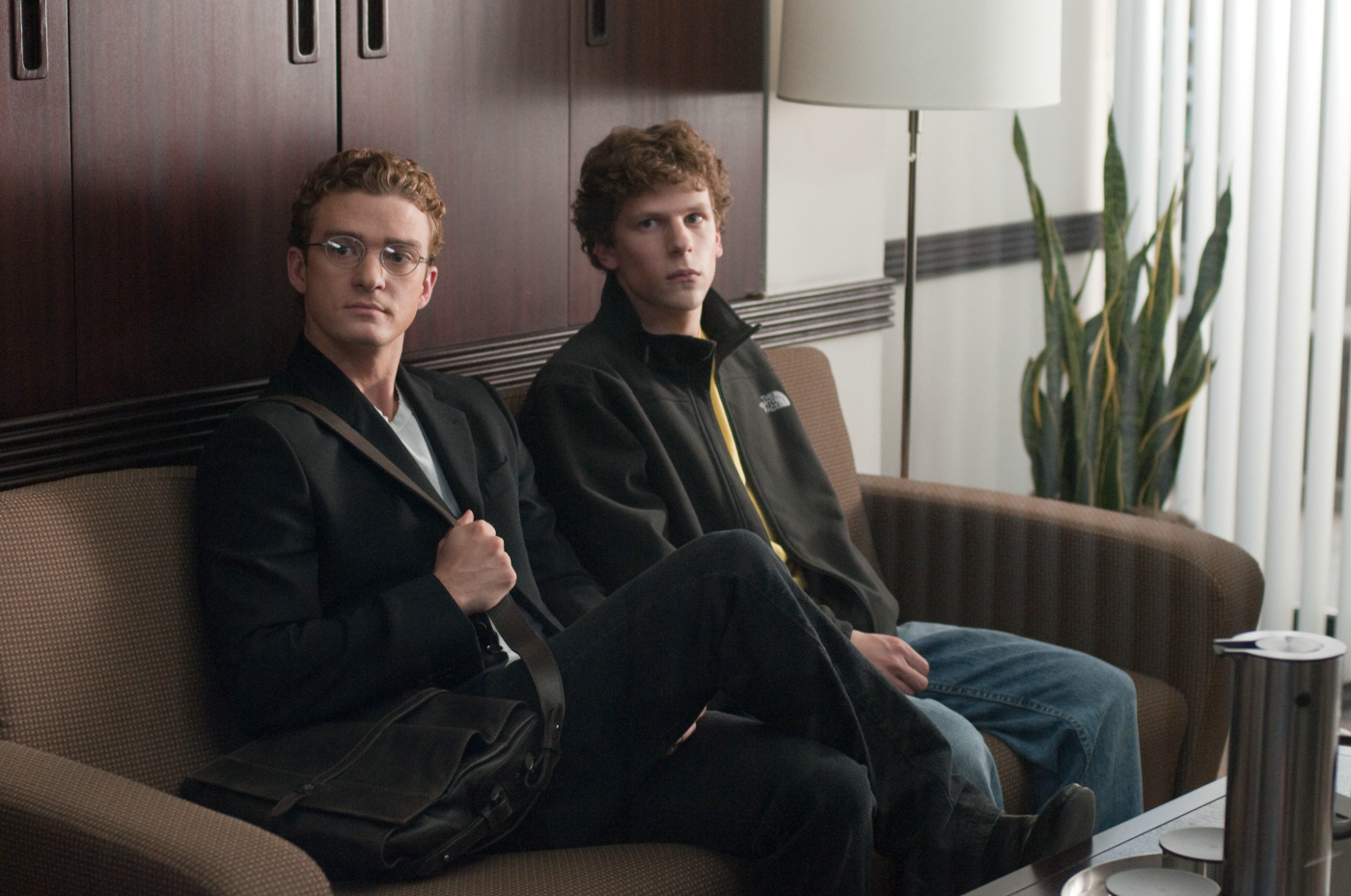
The Social Network (USA 2010)
"The Social Network" was my film of the year 2010 - I haven't made up my mind about 2011 just yet - so I decided to re-watch it recently to see if it is still as exhilarating now that the hype about the film - and facebook itself - has cooled off a little. To get straight to the point: yes, it is, and it always will be. It is a fascinating portrait of a generation and as such will stand the test of time. It is one of the few films that can instantly be called a modern classic.
When I first read about the project (on the web, where else?) I was rather skeptical. By the way, as skeptical as when I - suggested by a friend - first registered on this then relatively unknown social networking platform in the year of 2005. The idea of retelling one of the biggest success stories of recent business history after such a short term and of portraying the person of founder Mark Zuckerberg as a villain seemed problematic to me. And a middle-aged director like David Fincher who previously made mostly genre films didn't seem to me as the right guy to "get" what this generation was all about. It was clear from the very beginning that - as in many other biopics - reality would be misrepresented and a false image of the still living persons would be created. Above all, I asked myself whether the genesis of an Internet company could make for an interesting subject for a movie.
The fact that the final product works so well and is so much more than just a movie about facebook, has mostly two reasons: first of all, the brilliant script of Aaron Sorkin which - along with its eternal themes of class war and betrayal - indeed delivers gripping material for a film. Good films usually have one or two memorable scenes but "The Social Network" is a succession of great scenes. Even if the film is distinctly modern and so close to the attitude the current generation has to life, the underlying story is a classical drama that would be equally suitable for a Shakespeare play. Most characters are surprisingly complex and ambivalent - even Zuckerberg is not a real bad guy but also far from a hero. Despite all his newly achieved fame and fortune, he still fails to impress his ex-girlfriend or to enter the social class in which his fellow students at Harvard were born into.
The other reason for the success of the film is director David Fincher whose visually inventive direction makes the film enthralling despite the somewhat serious content - about half of the film consists of the various trials Zuckerberg is facing. He deserves credit that the film has such a strong connection to the "nowness of now" - as another critic put it. There has rarely been a film recently that captures the Zeitgeist as vividly and that I myself experienced as intensely - probably also because I was able to identify with the characters in the film in many ways.
"The Social Network" is not just a film about a phenomenal success story but a film about America and the world, about an individual and about all of us. In a few decades it will be regarded representative for our era in a way that "Wall Street" was for the 80s. With the main lesson to learn here that it is all about being cool. Times really have changed but greed still seems to be good. Only the "Gordon Gekkos" of our time are now called Sean Parker and Mark Zuckerberg...
9/10
When I first read about the project (on the web, where else?) I was rather skeptical. By the way, as skeptical as when I - suggested by a friend - first registered on this then relatively unknown social networking platform in the year of 2005. The idea of retelling one of the biggest success stories of recent business history after such a short term and of portraying the person of founder Mark Zuckerberg as a villain seemed problematic to me. And a middle-aged director like David Fincher who previously made mostly genre films didn't seem to me as the right guy to "get" what this generation was all about. It was clear from the very beginning that - as in many other biopics - reality would be misrepresented and a false image of the still living persons would be created. Above all, I asked myself whether the genesis of an Internet company could make for an interesting subject for a movie.
The fact that the final product works so well and is so much more than just a movie about facebook, has mostly two reasons: first of all, the brilliant script of Aaron Sorkin which - along with its eternal themes of class war and betrayal - indeed delivers gripping material for a film. Good films usually have one or two memorable scenes but "The Social Network" is a succession of great scenes. Even if the film is distinctly modern and so close to the attitude the current generation has to life, the underlying story is a classical drama that would be equally suitable for a Shakespeare play. Most characters are surprisingly complex and ambivalent - even Zuckerberg is not a real bad guy but also far from a hero. Despite all his newly achieved fame and fortune, he still fails to impress his ex-girlfriend or to enter the social class in which his fellow students at Harvard were born into.
The other reason for the success of the film is director David Fincher whose visually inventive direction makes the film enthralling despite the somewhat serious content - about half of the film consists of the various trials Zuckerberg is facing. He deserves credit that the film has such a strong connection to the "nowness of now" - as another critic put it. There has rarely been a film recently that captures the Zeitgeist as vividly and that I myself experienced as intensely - probably also because I was able to identify with the characters in the film in many ways.
"The Social Network" is not just a film about a phenomenal success story but a film about America and the world, about an individual and about all of us. In a few decades it will be regarded representative for our era in a way that "Wall Street" was for the 80s. With the main lesson to learn here that it is all about being cool. Times really have changed but greed still seems to be good. Only the "Gordon Gekkos" of our time are now called Sean Parker and Mark Zuckerberg...
9/10
![]() |
| The accidental billionaires |
November 10, 2011
La solitudine dei numeri primi (Italy 2010)
The recent title story of a local news magazine was "The end of love - feelings in times of personal liberty". This subject of being incapable of loving and the downside of individual freedom, which is so typical of our modern age, is also at the core of Saverio Costanzo's film "La solitudine dei numeri primi" which is based on Paolo Giordano's bestselling novel. Even if the love in the film, strictly speaking, doesn't really catch fire to begin with. At the time of the somehow conciliatory ending, resignation has already taken over killing off any hope that may have been there somewhere.
The pseudo-cryptic title already gives an idea about the state of mind of the characters but what may still be compelling in the book (which I haven't read), turns out to be rather tedious in the film. The story stretches over three decades and is told as a kind of mystery thriller. There is an event in the childhood of both main characters that will change their lives forever. Mutually attracted, they get closer again and again, but they never manage to really come together. The problem of the film is that it mostly lacks both tension and emotions. There is an oppressive atmosphere right from the beginning that does reflect the inner life and the increasing isolation of the protagonists quite well. But unfortunately, this state of inner emptiness transmits to their outside so it is quite difficult to feel any sympathy for the characters. After a while, you stop caring whether they end up together or not.
It's a shame because there would have been some pre-conditions for a thrilling movie experience: a bestseller as a template, a talented director ("Private" - the feature debut by Saverio Costanzo - won several awards) and a quite appropriately chosen cast which includes such fine actresses as Isabella Rossellini in supporting roles. But ultimately "La solitudine dei numeri primi" shares the fate of many well-produced, but ultimately soulless literary adaptations. Quality cinema? Yes, but without a heart. There are only a few moments that show the potential the film could have head. The film offers some visual pleasures even if Costanzo's kicks over the traces with his directorial ideas from time to time. This is mainly due to the unnecessary stylization and the sometimes annoying use of music in the film.
To conclude, let us hope that the condition of love in the 21st century is not as bad as films like this suggest. It remains very doubtful, however, whether this film is able to rescue any moviegoers from their own lethargy...
7/10
The pseudo-cryptic title already gives an idea about the state of mind of the characters but what may still be compelling in the book (which I haven't read), turns out to be rather tedious in the film. The story stretches over three decades and is told as a kind of mystery thriller. There is an event in the childhood of both main characters that will change their lives forever. Mutually attracted, they get closer again and again, but they never manage to really come together. The problem of the film is that it mostly lacks both tension and emotions. There is an oppressive atmosphere right from the beginning that does reflect the inner life and the increasing isolation of the protagonists quite well. But unfortunately, this state of inner emptiness transmits to their outside so it is quite difficult to feel any sympathy for the characters. After a while, you stop caring whether they end up together or not.
It's a shame because there would have been some pre-conditions for a thrilling movie experience: a bestseller as a template, a talented director ("Private" - the feature debut by Saverio Costanzo - won several awards) and a quite appropriately chosen cast which includes such fine actresses as Isabella Rossellini in supporting roles. But ultimately "La solitudine dei numeri primi" shares the fate of many well-produced, but ultimately soulless literary adaptations. Quality cinema? Yes, but without a heart. There are only a few moments that show the potential the film could have head. The film offers some visual pleasures even if Costanzo's kicks over the traces with his directorial ideas from time to time. This is mainly due to the unnecessary stylization and the sometimes annoying use of music in the film.
To conclude, let us hope that the condition of love in the 21st century is not as bad as films like this suggest. It remains very doubtful, however, whether this film is able to rescue any moviegoers from their own lethargy...
7/10
![]() |
| Lonely together: Luca Marinelli, Alba Rohrwacher |
October 30, 2011
A Dangerous Method (UK 2011)
"A Dangerous Method" has been called David Cronenberg's most conventional film so far. And indeed, elegant settings, lush cinematography, meticulously designed period costumes and an all-star cast are not what you usually expect from the director of such idiosyncratic films as "Videodrome", "Naked Lunch" and "Crash". But even if it lacks his signature morbid style, "A Dangerous Method" is still very much a Cronenberg film. Only this time, his flair for dark obsessions are firmly hidden beneath a polished surface. However, it does not take long for them to come out in his adaptation of the true story about the relationships between psychoanalysts Sigmund Freud and Carl Gustav Jung and their patient, the young Sabina Spielrein who would later herself become one of the first female psychoanalysts.
But nevertheless something is lacking in a film that tries too hard to be perfect - or please the Academy Award voters. It may sound implausible but the Oscar may indeed have been in the mind of both David Cronenberg (who never won one) and producer Jeremy Thomas (whose win for "The Last Emperor" lies back 23 years). Even the trailer for the film looks trimmed for it. And while "A Dangerous Method" is a well-made, intelligent film it never really elevates beyond quality entertainment. Despite all the nice period details, it also never feels truly authentic. Partly this is due to the casting where the major flaw of the film is to be found in the person of Keira Knightley. Starting with her fake Russian accent and her whole appearance, she feels wrong for the role. Especially in the beginning, her interpretation of the character's hysteria is anything but subtle. What's even more problematic is the fact that she should evolve as the strong independent woman by the end of the film who stands up against the two dominant male figures. But comparing her performance to the ones of such fine actors as Michael Fassbender and Viggo Mortensen, it is inevitable that she comes off as the weak link.
"A Dangerous Method" is still a welcome rarity in the territory of mainstream cinema in the sense that it does challenge the audience intellectually. Its tension derives from words, not action. But the words here are not enough to make the film great. As a matter of fact, for a film based on a stage play called "The Talking Cure" about two of the most important psychoanalysts, "A Dangerous Method" has surprisingly little to say...
7/10
(Viennale)
But nevertheless something is lacking in a film that tries too hard to be perfect - or please the Academy Award voters. It may sound implausible but the Oscar may indeed have been in the mind of both David Cronenberg (who never won one) and producer Jeremy Thomas (whose win for "The Last Emperor" lies back 23 years). Even the trailer for the film looks trimmed for it. And while "A Dangerous Method" is a well-made, intelligent film it never really elevates beyond quality entertainment. Despite all the nice period details, it also never feels truly authentic. Partly this is due to the casting where the major flaw of the film is to be found in the person of Keira Knightley. Starting with her fake Russian accent and her whole appearance, she feels wrong for the role. Especially in the beginning, her interpretation of the character's hysteria is anything but subtle. What's even more problematic is the fact that she should evolve as the strong independent woman by the end of the film who stands up against the two dominant male figures. But comparing her performance to the ones of such fine actors as Michael Fassbender and Viggo Mortensen, it is inevitable that she comes off as the weak link.
"A Dangerous Method" is still a welcome rarity in the territory of mainstream cinema in the sense that it does challenge the audience intellectually. Its tension derives from words, not action. But the words here are not enough to make the film great. As a matter of fact, for a film based on a stage play called "The Talking Cure" about two of the most important psychoanalysts, "A Dangerous Method" has surprisingly little to say...
7/10
(Viennale)
![]() |
| Coffee and cigars |
Le gamin au vélo (Belgium 2011)
Among the films in this year's Cannes competition, there were two that shared the spotlight: Terrence Malick's ambitious epic "The Tree of Life" which eventually won the legendary director the Palme d'Or and Lars von Trier's "Melancholia", not least thanks to its controversial press conference.
But there was at least one other film that would have deserved more media attention not for the über-ego of its director but because of the quality of the actual film. And if I would have to choose one film, among all the strong competitors, it would have to be "Le gamin au vélo" by the Dardenne brothers. It is one of their best films so far which almost automatically makes it one of the best films of the year. The reason they "only" won the Grand Prize of the jury in Cannes was probably because they already received the Palme d'Or twice for films similar to this one. But even if there is the feeling that they have made this kind of film before, "Le gamin au vélo" is still a revelation.
A simple tale of a young abandoned child, it is authentic and rough, but also sincere, tender and touching. It is the kind of film that no one makes as good as the Dardennes. The performances are great and even even a big name star like Cécile De France blends seemlessly into the ensemble. I didn't even realize it was her until about 30 minutes into the film. A piano concerto by Beethoven is used occasionally during the film in key moments. Some may find such dramatization - which is somehow atypical for the Dardennes - unnecessary but it worked perfectly for me and even made me cry. Even the Dardennes, however subtly, seem to have their tricks to create emotions...
Le gamin au vélo is a simple yet flawless film. It is the best film about a father, a son and a bicycle since "Bicycle Thieves". In a running time of just 87 minutes, it has everything that cinema needs to have. Nothing more, nothing less.
9/10
(Viennale)
But there was at least one other film that would have deserved more media attention not for the über-ego of its director but because of the quality of the actual film. And if I would have to choose one film, among all the strong competitors, it would have to be "Le gamin au vélo" by the Dardenne brothers. It is one of their best films so far which almost automatically makes it one of the best films of the year. The reason they "only" won the Grand Prize of the jury in Cannes was probably because they already received the Palme d'Or twice for films similar to this one. But even if there is the feeling that they have made this kind of film before, "Le gamin au vélo" is still a revelation.
A simple tale of a young abandoned child, it is authentic and rough, but also sincere, tender and touching. It is the kind of film that no one makes as good as the Dardennes. The performances are great and even even a big name star like Cécile De France blends seemlessly into the ensemble. I didn't even realize it was her until about 30 minutes into the film. A piano concerto by Beethoven is used occasionally during the film in key moments. Some may find such dramatization - which is somehow atypical for the Dardennes - unnecessary but it worked perfectly for me and even made me cry. Even the Dardennes, however subtly, seem to have their tricks to create emotions...
Le gamin au vélo is a simple yet flawless film. It is the best film about a father, a son and a bicycle since "Bicycle Thieves". In a running time of just 87 minutes, it has everything that cinema needs to have. Nothing more, nothing less.
9/10
(Viennale)
![]() |
| Thomas Doret and Cécile De France in "Le gamin au vélo" |
October 25, 2011
Melancholia (Denmark 2011)
"Melancholy is not negative, it is a positive feeling. It's not about depression. It's a feeling of longing." - Ville Valo
If Lars von Trier's verbal derailments in Cannes would have been part of a publicity campaign, it would have been a brilliant one. A new Lars von Trier film is already an event that the whole film world is awaiting about but now it has become a film that the whole world is talking about. But nevertheless it still proves a difficult film to market since it can not be easily categorized due to its status as an "Arthouse blockbuster" somewhere between "Festen" and "Armageddon".
Kirsten Dunst's character in the film works in advertising and has to come up with a tagline in the course of the film. Which somehow seems ironic since there has rarely been a tagline that better described a film than the one for "Melancholia" which is simply called "a beautiful movie about the end of the world". This absolutely gets to the point because "Melancholia" is - like the word itself - above all beautiful, gorgeous, mesmerizing. Its excessive stylization is a million miles away from the unfiltered purity of the Dogma 95 films. The first part of the film may still recall "Festen" but instead of the shaky handheld video camera we now get gracefully composed shots set to the music of Wagner. No wonder that even Lars von Trier complains that the film has turned out too beautiful. Apparently he didn't control his cinematographer Manuel Alberto Claro enough because of his own depression during the shooting of the film.
But what could be even less expected than the visual feast from a) Lars von Trier and b) a pessimistic film about depression and the apocalypse is how enjoyable the film is in its own kind of way. Which is also the film's main problem because it can not really taken seriously. Beneath all the splendor there is surprisingly little substance left. Even the great cast, above all Kirsten Dunst in her best performance ever, can only add a certain depth to what is, if judged objectively, a rather ridiculous movie.
But cinema is not mathematics, it is about emotions rather than sense. "Melancholia" may be mostly another ego project from Lars von Trier and his ultimate guilty pleasure but it is nevertheless an enormously cinematic experience.
8/10
(Viennale)
If Lars von Trier's verbal derailments in Cannes would have been part of a publicity campaign, it would have been a brilliant one. A new Lars von Trier film is already an event that the whole film world is awaiting about but now it has become a film that the whole world is talking about. But nevertheless it still proves a difficult film to market since it can not be easily categorized due to its status as an "Arthouse blockbuster" somewhere between "Festen" and "Armageddon".
Kirsten Dunst's character in the film works in advertising and has to come up with a tagline in the course of the film. Which somehow seems ironic since there has rarely been a tagline that better described a film than the one for "Melancholia" which is simply called "a beautiful movie about the end of the world". This absolutely gets to the point because "Melancholia" is - like the word itself - above all beautiful, gorgeous, mesmerizing. Its excessive stylization is a million miles away from the unfiltered purity of the Dogma 95 films. The first part of the film may still recall "Festen" but instead of the shaky handheld video camera we now get gracefully composed shots set to the music of Wagner. No wonder that even Lars von Trier complains that the film has turned out too beautiful. Apparently he didn't control his cinematographer Manuel Alberto Claro enough because of his own depression during the shooting of the film.
But what could be even less expected than the visual feast from a) Lars von Trier and b) a pessimistic film about depression and the apocalypse is how enjoyable the film is in its own kind of way. Which is also the film's main problem because it can not really taken seriously. Beneath all the splendor there is surprisingly little substance left. Even the great cast, above all Kirsten Dunst in her best performance ever, can only add a certain depth to what is, if judged objectively, a rather ridiculous movie.
But cinema is not mathematics, it is about emotions rather than sense. "Melancholia" may be mostly another ego project from Lars von Trier and his ultimate guilty pleasure but it is nevertheless an enormously cinematic experience.
8/10
(Viennale)
![]() |
| Sadness is a blessing: Kirsten Dunst and Charlotte Gainsbourg |
October 24, 2011
The Color Wheel (USA 2011)
There are films that we love even though we know that they're flawed. For me, such a film is Alex Ross Perry's "The Color Wheel", the kind of American independent film that truly deserves to be called "independent". I recently discovered it at the Viennale where it was the film that gave me the most pleasure.
I love it because it is called "The Color Wheel" but is actually a black and white film. I love it because it has the look of 16mm even though it was shot digitally. I love it because the main actress looks like Anna Karina in Godard's films. I love it because it has a lot of dialogue and awkward situations. I love it because I can somehow relate to the characters. I love it because of its nostalgic credits. I love it because of the immoral ending. I love it because it is not perfect.
I love it.
7/10
(Viennale)
I love it because it is called "The Color Wheel" but is actually a black and white film. I love it because it has the look of 16mm even though it was shot digitally. I love it because the main actress looks like Anna Karina in Godard's films. I love it because it has a lot of dialogue and awkward situations. I love it because I can somehow relate to the characters. I love it because of its nostalgic credits. I love it because of the immoral ending. I love it because it is not perfect.
I love it.
7/10
(Viennale)
![]() |
| Mutual appreciation: "The Color Wheel" |
October 23, 2011
Jeanne Dielman, 23 quai de Commerce, 1080 Bruxelles (Belgium 1975)
"There are no rules in filmmaking. Only sins. And the cardinal sin is dullness."Frank Capra
I highly doubt that Frank Capra ever saw Chantal Akerman's "Jeanne Dielman, 23 quai de Commerce, 1080 Bruxelles". He might not have liked it since it embodies values exactly opposite to the ones his own cinema stood for. Capra's sentimental films usually had a charming male hero, fast-paced scenes with lots of dialogue and a happy ending full of optimism. "Jeanne Dielman" on the other hand has a rather boring female main character, painfully long scenes with almost no dialogue and action and an ending that is anything but optimistic. So Capra is for people who see film as entertainment and whereas Akerman is purely for feminists and serious film fans who dress all in black and loathe capitalism. And even for them, "Jeanne Dielman" may be more a "cultural vegetable" rather than a film they actually enjoy. So that's it, right? Why discuss the matter any further?
Because luckily, things are not that simple. There is no cinema that is, by itself, better than the other. There is only cinema. But there are certainly good and bad directors. Frank Capra and Chantal Akerman are both good directors, albeit for different reasons. It is, in fact, quite possible to appreciate both of them as I myself do. I would even go so far as to call them the "ying and yang of cinema". We are complex human beings and we need them both.
As far as "Jeanne Dielman" is concerned, it is certainly a demanding film - if not a particularly difficult or inaccessible one. Watching the main character, a prostitute working from her own apartment, peeling potatoes and washing up for almost four hours can be nerve-wrecking. But the great thing about the film is that after a while, after you get used to it, you start noticing the small details and the visual delights of the cinematography. Like the recurring symmetrical compositions and the ubiquituous use of the colours brown and green.
Most films shy away from daily routine actions. Even those that apparently aim for realism do not show what people actually do most of the time. Mundane, ordinary things that are quite boring but nevertheless make out large portions of our lives. "Jeanne Dielman" is a film that dares to focus on these mundane things. The film could indeed be called dull but it needs to be. Dullness is its main point and the reason the provocative ending is so effective.
My viewing advice is: watch it at home and make a short pause after every "day" (the film tells - in full detail - three consecutive days in Jeanne Dielman's life). Do some grunt work in between to get in the mood. And I promise you that you will, by the end of the film, feel what it must be like to actually be the main character. Which is not something that is likely to happen when you're watching a Capra film...
The Vienna Film Festival "Viennale" is currently devoting a retrospective to Chantal Akerman.
9/10
I highly doubt that Frank Capra ever saw Chantal Akerman's "Jeanne Dielman, 23 quai de Commerce, 1080 Bruxelles". He might not have liked it since it embodies values exactly opposite to the ones his own cinema stood for. Capra's sentimental films usually had a charming male hero, fast-paced scenes with lots of dialogue and a happy ending full of optimism. "Jeanne Dielman" on the other hand has a rather boring female main character, painfully long scenes with almost no dialogue and action and an ending that is anything but optimistic. So Capra is for people who see film as entertainment and whereas Akerman is purely for feminists and serious film fans who dress all in black and loathe capitalism. And even for them, "Jeanne Dielman" may be more a "cultural vegetable" rather than a film they actually enjoy. So that's it, right? Why discuss the matter any further?
Because luckily, things are not that simple. There is no cinema that is, by itself, better than the other. There is only cinema. But there are certainly good and bad directors. Frank Capra and Chantal Akerman are both good directors, albeit for different reasons. It is, in fact, quite possible to appreciate both of them as I myself do. I would even go so far as to call them the "ying and yang of cinema". We are complex human beings and we need them both.
As far as "Jeanne Dielman" is concerned, it is certainly a demanding film - if not a particularly difficult or inaccessible one. Watching the main character, a prostitute working from her own apartment, peeling potatoes and washing up for almost four hours can be nerve-wrecking. But the great thing about the film is that after a while, after you get used to it, you start noticing the small details and the visual delights of the cinematography. Like the recurring symmetrical compositions and the ubiquituous use of the colours brown and green.
Most films shy away from daily routine actions. Even those that apparently aim for realism do not show what people actually do most of the time. Mundane, ordinary things that are quite boring but nevertheless make out large portions of our lives. "Jeanne Dielman" is a film that dares to focus on these mundane things. The film could indeed be called dull but it needs to be. Dullness is its main point and the reason the provocative ending is so effective.
My viewing advice is: watch it at home and make a short pause after every "day" (the film tells - in full detail - three consecutive days in Jeanne Dielman's life). Do some grunt work in between to get in the mood. And I promise you that you will, by the end of the film, feel what it must be like to actually be the main character. Which is not something that is likely to happen when you're watching a Capra film...
The Vienna Film Festival "Viennale" is currently devoting a retrospective to Chantal Akerman.
9/10
![]() |
| "The Housewife": Delphine Seyrig as Jeanne Dielman |
October 16, 2011
La piel que habito (Spain 2011)
It often happens in the careers of great directors that once they have received awards and reached their peaks, they arrive at a point where they struggle to get back to that level. Often these later works feel forced despite technical mastery. Judging from his last two films, Spanish auteur Pedro Almodóvar seems to have reached that point and lost some of the spirit that made him a household name on the art film circuit.
Even if his latest film "La piel que habito" still bears his signature style as well as familiar topics and situations. But as with "Los abrazos rotos", he fails to make the film emotionally engaging. The story of a plastic surgeon that starts experimenting with skin grafting after the death of his wife is well constructed but the characters remain shallow. The film also shifts too much between serious drama, thriller and horror. Almodóvar's fondness for the eccentric - some would say the perverse - is once again on display. His hardcore fans might like it, other viewers will find it distasteful. But then, this seeming contraction between beautiful images and disturbing content has always been a trademark of Almodóvar's cinema and a large part of its fascination.
"La piel que habito" is - despite the nods to Georges Franju - a unique work from a unique director but it has the same problem that fake skin has: it might look nice but it is just not the real thing.
6/10
Even if his latest film "La piel que habito" still bears his signature style as well as familiar topics and situations. But as with "Los abrazos rotos", he fails to make the film emotionally engaging. The story of a plastic surgeon that starts experimenting with skin grafting after the death of his wife is well constructed but the characters remain shallow. The film also shifts too much between serious drama, thriller and horror. Almodóvar's fondness for the eccentric - some would say the perverse - is once again on display. His hardcore fans might like it, other viewers will find it distasteful. But then, this seeming contraction between beautiful images and disturbing content has always been a trademark of Almodóvar's cinema and a large part of its fascination.
"La piel que habito" is - despite the nods to Georges Franju - a unique work from a unique director but it has the same problem that fake skin has: it might look nice but it is just not the real thing.
6/10
![]() |
| Eyes without a face: "The Skin I live in" |
October 14, 2011
Le cercle rouge (France 1970)
In an interview Jean-Pierre Melville gave in 1971, he predicted that all cinemas would vanish in 50 years because of television and believed that his films would probably age terribly. His only hope was that his work was important enough so that he would at least be mentioned in film encyclopedias.
Well, there are still 10 years to go but chances are his predictions won't come true. Cinema may not be flourishing and is going through some radical changes but it is still alive and well. Melville, despite still being a rather underrated director, has earned himself an important place in film history and an ever-growing fanbase. And as far as his films are concerned, they have aged beautifully. With their existential themes and Melville's rigourous focus on style rather than substance, they fit quite well in our superficial modern world.
The story of "Le Cercle Rouge" - his biggest success - is a rather familiar one and quickly told. Two ex-cons reunite for one last coup but after successfully executing the heist, are betrayed and hunted down by an obsessed cop. A classical tale of male friendships and loyalty. But what the film clearly proves that filmmaking is not about what to tell but how. And there few filmmakers that know how to better employ the means of filmmaking. First of all, he has patience and takes time to create an atmosphere. Autumnal landscapes with lots of blues, greys and browns and a Paris that is even more elegant and cool than the real city. Trenchcoats, hats and American cars. Rarely any women. In short, the world according to Jean-Pierre Melville. In addition, he orchestrates some brilliant moments that are further evidence that we are in the hands of a true master of cinema. The long, dialogue-free heist sequence doesn't have to hide from the various films Melville draw his inspirations from. But best of all - what makes the film truly great instead of just very good - are the the small, subtle details that only perfectionists like Melville pay attention to.
The actors are fine too and - with the exception of Gian Maria Volonté who Melville didn't get along with - embody the classical French bourgeoise gentleman that Melville himself was. Henri Decae's cinematogrophy is superb and the jazzy score does what good film music should do: enhance the mood rather than create it. But overall - as the initials "JPM" that appear in a key scene suggest - there is never any doubt that this is Melville's show.
I predict that it will still be watched by film conaisseurs in 50 years.
And I hope there will be some cinemas left then...
9/10
Well, there are still 10 years to go but chances are his predictions won't come true. Cinema may not be flourishing and is going through some radical changes but it is still alive and well. Melville, despite still being a rather underrated director, has earned himself an important place in film history and an ever-growing fanbase. And as far as his films are concerned, they have aged beautifully. With their existential themes and Melville's rigourous focus on style rather than substance, they fit quite well in our superficial modern world.
The story of "Le Cercle Rouge" - his biggest success - is a rather familiar one and quickly told. Two ex-cons reunite for one last coup but after successfully executing the heist, are betrayed and hunted down by an obsessed cop. A classical tale of male friendships and loyalty. But what the film clearly proves that filmmaking is not about what to tell but how. And there few filmmakers that know how to better employ the means of filmmaking. First of all, he has patience and takes time to create an atmosphere. Autumnal landscapes with lots of blues, greys and browns and a Paris that is even more elegant and cool than the real city. Trenchcoats, hats and American cars. Rarely any women. In short, the world according to Jean-Pierre Melville. In addition, he orchestrates some brilliant moments that are further evidence that we are in the hands of a true master of cinema. The long, dialogue-free heist sequence doesn't have to hide from the various films Melville draw his inspirations from. But best of all - what makes the film truly great instead of just very good - are the the small, subtle details that only perfectionists like Melville pay attention to.
The actors are fine too and - with the exception of Gian Maria Volonté who Melville didn't get along with - embody the classical French bourgeoise gentleman that Melville himself was. Henri Decae's cinematogrophy is superb and the jazzy score does what good film music should do: enhance the mood rather than create it. But overall - as the initials "JPM" that appear in a key scene suggest - there is never any doubt that this is Melville's show.
I predict that it will still be watched by film conaisseurs in 50 years.
And I hope there will be some cinemas left then...
9/10
![]() |
| Men at work: Yves Montand, Gian Maria Volonté and Alain Delon |
October 12, 2011
Le diable probablement (France 1977)
"Le diable probablement" or "The devil, probably" - is one of my all time favourite film titles. It is enigmatic but also getting very much to the point once you hear it spoken out casually in a scene of the film. It also sums up the film perfectly without giving anything away.
We as humans watch the world slowly but steadily falling apart and while we are conscious of that fact, we seem to be unable to do something against it. Most of us are not bad people but we have resigned inwardly in the face of the sheer amount of social injustice and the irrevocable destruction of our environment. But we don't take any responsibilty, we always blame someone else. And we might even be better off for it: if we really would face our failures we might end up like the main character in the film.
Bresson made the film in the late 70s which in a not-so-distant future will be called the time when the world finally got of balance. Unlimited consumption, capitalism and industrialization took over while nature became increasingly threatened. The growth of the world's population got out of control while CO2 emmission were starting to skyrocket. The sad thing is that what was only suggested back then has gotten much worse in the meanwhile. Bresson's bleak vision now seems shockingly real - at least if you look as closely as he does.
The young people in the film seem to be the only ones that still care about the future despite their apparent lack of feelings. Some still try to fight for a better world while others just can't handle it anymore. Bresson's spare style and his preference of "non actors" has rarely been more appropriate than here. In a world without values, there is hardly any room left for emotions either. The young people today seem to be different than this generation. Now the prevailing attitude is "the world is going to hell so we might just as well have some fun." Maybe because there is no more Bresson to remind us that maybe we shouldn't...
I'm usually an optimistic person and if my review seems to be overly negative then this is only due to the strong impact the film had on me. I can't help feeling otherwise after watching this devastating film. From a cinematic point of view, it may not be the best film in Bresson's ouevre but it is still close to a masterpiece. And it certainly gives me the shivers.
8/10
We as humans watch the world slowly but steadily falling apart and while we are conscious of that fact, we seem to be unable to do something against it. Most of us are not bad people but we have resigned inwardly in the face of the sheer amount of social injustice and the irrevocable destruction of our environment. But we don't take any responsibilty, we always blame someone else. And we might even be better off for it: if we really would face our failures we might end up like the main character in the film.
Bresson made the film in the late 70s which in a not-so-distant future will be called the time when the world finally got of balance. Unlimited consumption, capitalism and industrialization took over while nature became increasingly threatened. The growth of the world's population got out of control while CO2 emmission were starting to skyrocket. The sad thing is that what was only suggested back then has gotten much worse in the meanwhile. Bresson's bleak vision now seems shockingly real - at least if you look as closely as he does.
The young people in the film seem to be the only ones that still care about the future despite their apparent lack of feelings. Some still try to fight for a better world while others just can't handle it anymore. Bresson's spare style and his preference of "non actors" has rarely been more appropriate than here. In a world without values, there is hardly any room left for emotions either. The young people today seem to be different than this generation. Now the prevailing attitude is "the world is going to hell so we might just as well have some fun." Maybe because there is no more Bresson to remind us that maybe we shouldn't...
I'm usually an optimistic person and if my review seems to be overly negative then this is only due to the strong impact the film had on me. I can't help feeling otherwise after watching this devastating film. From a cinematic point of view, it may not be the best film in Bresson's ouevre but it is still close to a masterpiece. And it certainly gives me the shivers.
8/10
![]() |
| Youth without Youth: "Le diable probablement" |
Subscribe to:
Posts (Atom)