Showing posts with label The cinematic Ivy League. Show all posts

November 11, 2011

The Social Network (USA 2010)

"The Social Network" was my film of the year 2010 - I haven't made up my mind about 2011 just yet - so I decided to re-watch it recently to see if it is still as exhilarating now that the hype about the film - and facebook itself - has cooled off a little. To get straight to the point: yes, it is, and it always will be. It is a fascinating portrait of a generation and as such will stand the test of time. It is one of the few films that can instantly be called a modern classic.

When I first read about the project (on the web, where else?) I was rather skeptical. By the way, as skeptical as when I - suggested by a friend - first registered on this then relatively unknown social networking platform in the year of 2005. The idea of retelling one of the biggest success stories of recent business history after such a short term and of portraying the person of founder Mark Zuckerberg as a villain seemed problematic to me. And a middle-aged director like David Fincher who previously made mostly genre films didn't seem to me as the right guy to "get" what this generation was all about. It was clear from the very beginning that - as in many other biopics - reality would be misrepresented and a false image of the still living persons would be created. Above all, I asked myself whether the genesis of an Internet company could make for an interesting subject for a movie.

The fact that the final product works so well and is so much more than just a movie about facebook, has mostly two reasons: first of all, the brilliant script of Aaron Sorkin which - along with its eternal themes of class war and betrayal - indeed delivers gripping material for a film. Good films usually have one or two memorable scenes but "The Social Network" is a succession of great scenes. Even if the film is distinctly modern and so close to the attitude the current generation has to life, the underlying story is a classical drama that would be equally suitable for a Shakespeare play. Most characters are surprisingly complex and ambivalent - even Zuckerberg is not a real bad guy but also far from a hero. Despite all his newly achieved fame and fortune, he still fails to impress his ex-girlfriend or to enter the social class in which his fellow students at Harvard were born into.

The other reason for the success of the film is director David Fincher whose visually inventive direction makes the film enthralling despite the somewhat serious content - about half of the film consists of the various trials Zuckerberg is facing. He deserves credit that the film has such a strong connection to the "nowness of now" - as another critic put it. There has rarely been a film recently that captures the Zeitgeist as vividly and that I myself experienced as intensely - probably also because I was able to identify with the characters in the film in many ways.

"The Social Network" is not just a film about a phenomenal success story but a film about America and the world, about an individual and about all of us. In a few decades it will be regarded representative for our era in a way that "Wall Street" was for the 80s. With the main lesson to learn here that it is all about being cool. Times really have changed but greed still seems to be good. Only the "Gordon Gekkos" of our time are now called Sean Parker and Mark Zuckerberg...

9/10
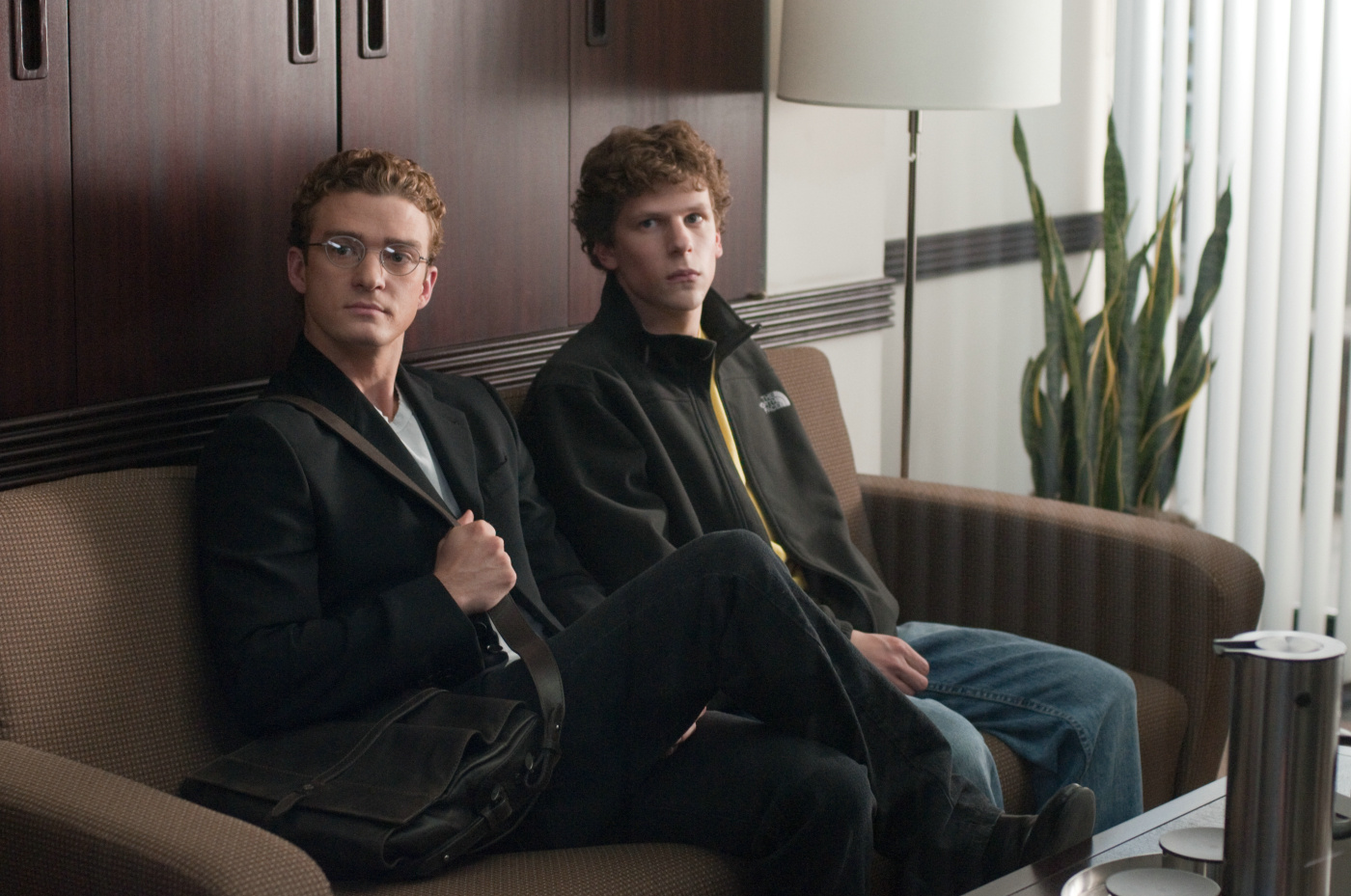
The accidental billionaires

October 23, 2011

Jeanne Dielman, 23 quai de Commerce, 1080 Bruxelles (Belgium 1975)

"There are no rules in filmmaking. Only sins. And the cardinal sin is dullness."Frank Capra

I highly doubt that Frank Capra ever saw Chantal Akerman's "Jeanne Dielman, 23 quai de Commerce, 1080 Bruxelles". He might not have liked it since it embodies values exactly opposite to the ones his own cinema stood for. Capra's sentimental films usually had a charming male hero, fast-paced scenes with lots of dialogue and a happy ending full of optimism. "Jeanne Dielman" on the other hand has a rather boring female main character, painfully long scenes with almost no dialogue and action and an ending that is anything but optimistic. So Capra is for people who see film as entertainment and whereas Akerman is purely for feminists and serious film fans who dress all in black and loathe capitalism. And even for them, "Jeanne Dielman" may be more a "cultural vegetable" rather than a film they actually enjoy. So that's it, right? Why discuss the matter any further?

Because luckily, things are not that simple. There is no cinema that is, by itself, better than the other. There is only cinema. But there are certainly good and bad directors. Frank Capra and Chantal Akerman are both good directors, albeit for different reasons. It is, in fact, quite possible to appreciate both of them as I myself do. I would even go so far as to call them the "ying and yang of cinema". We are complex human beings and we need them both.

As far as "Jeanne Dielman" is concerned, it is certainly a demanding film - if not a particularly difficult or inaccessible one. Watching the main character, a prostitute working from her own apartment, peeling potatoes and washing up for almost four hours can be nerve-wrecking. But the great thing about the film is that after a while, after you get used to it, you start noticing the small details and the visual delights of the cinematography. Like the recurring symmetrical compositions and the ubiquituous use of the colours brown and green.

Most films shy away from daily routine actions. Even those that apparently aim for realism do not show what people actually do most of  the time. Mundane, ordinary things that are quite boring but nevertheless make out large portions of our lives. "Jeanne Dielman" is a film that dares to focus on these mundane things. The film could indeed be called dull but it needs to be. Dullness is its main point and the reason the provocative ending is so effective.

My viewing advice is: watch it at home and make a short pause after every "day" (the film tells - in full detail - three consecutive days in Jeanne Dielman's life). Do some grunt work in between to get in the mood. And I promise you that you will, by the end of the film, feel what it must be like to actually be the main character. Which is not something that is likely to happen when you're watching a Capra film...

The Vienna Film Festival "Viennale" is currently devoting a retrospective to Chantal Akerman.

9/10

"The Housewife": Delphine Seyrig as Jeanne Dielman

October 14, 2011

Le cercle rouge (France 1970)

In an interview Jean-Pierre Melville gave in 1971, he predicted that all cinemas would vanish in 50 years because of television and believed that his films would probably age terribly. His only hope was that his work was important enough so that he would at least be mentioned in film encyclopedias.

Well, there are still 10 years to go but chances are his predictions won't come true. Cinema may not be flourishing and is going through some radical changes but it is still alive and well. Melville, despite still being a rather underrated director, has earned himself an important place in film history and an ever-growing fanbase. And as far as his films are concerned, they have aged beautifully. With their existential themes and Melville's rigourous focus on style rather than substance, they fit quite well in our superficial modern world.

The story of "Le Cercle Rouge" - his biggest success - is a rather familiar one and quickly told. Two ex-cons reunite for one last coup but after successfully executing the heist, are betrayed and hunted down by an obsessed cop. A classical tale of male friendships and loyalty. But what the film clearly proves that filmmaking is not about what to tell but how. And there few filmmakers that know how to better employ the means of filmmaking. First of all, he has patience and takes time to create an atmosphere. Autumnal landscapes with lots of blues, greys and browns and a Paris that is even more elegant and cool than the real city. Trenchcoats, hats and American cars. Rarely any women. In short, the world according to Jean-Pierre Melville. In addition, he orchestrates some brilliant moments that are further evidence that we are in the hands of a true master of cinema. The long, dialogue-free heist sequence doesn't have to hide from the various films Melville draw his inspirations from. But best of all - what makes the film truly great instead of just very good - are the the small, subtle details that only perfectionists like Melville pay attention to.

The actors are fine too and - with the exception of Gian Maria Volonté who Melville didn't get along with - embody the classical French bourgeoise gentleman that Melville himself was. Henri Decae's cinematogrophy is superb and the jazzy score does what good film music should do: enhance the mood rather than create it. But overall - as the initials "JPM" that appear in a key scene suggest - there is never any doubt that this is Melville's show.

I predict that it will still be watched by film conaisseurs in 50 years.

And I hope there will be some cinemas left then...

9/10

Men at work: Yves Montand, Gian Maria Volonté and Alain Delon

September 25, 2011

Stand by Me (USA 1986)

"I never had better friends than the friends I had when I was twelve. Jesus, does anyone?"

When I saw "Stand by Me" for the first time in the 90s, I was a young kid myself, not much older than the characters in the film but still growing up, discovering the world and my passion for cinema. Growing up in a rural area, my life was very similar to the ones of the boys back then. The film is set in 1959 but it is actually much closer to my experiences than to the ones of the Internet generation. Together with my friends, we often went to the woods to smoke secretly or just to have fun and talks about the things we couldn't or didn't want to share with the adults. The woods were a perfect place for that, a fascinating world within the world. We even had built a tree house which at least partially survived to this day. I didn't realize back then of course but I do now how very true the above quote from the film is. The film is my lost innocence captured on celluloid. And judging from the comments and reviews on various blogs and Internet sites, I am not the only one who sees it that way...

The universal nature of the film is also the main reason why it works so well. Not only for the male audience - it rates higher among females on IMDb - does it touch something in every one of us and makes brilliant use of one thing that movies do so well: connecting us with others and the world and giving us the feeling that we are not alone. The fact that the movie is superbly told (based on a great short story by Stephen King, a hero of my adolescence) as well as beautifully shot and acted only enforces that. The disappearance of River Phoenix at the end of the film is especially heartbraking given the circumstances he later left our world. Watching his great performance painfully reminds you what an extraordinary actor he would have become.

Looking at "Stand by Me" now 25 years later the film is also a portrait of an innocent generation. In a world without constant without Internet and video games, you still had to be actively looking in order to find something remotely exciting instead of having the kicks delivered comfortably to your living room. Kids were still in contact with nature back than and playing outside. New experiences were made in a frequency that still gave you time to process them. I seriously doubt that today's kids would be that excited about finding a body - they have seen too many of them on TV already. 

But even they will sooner or later be able to enjoy "Stand by Me". It is a film that transcends generations and a film that will never come of age. Many bigger and seemingly more important movies from the 80s are now forgotten but "Stand by Me" - in all its authentic simplicity - will never be.

8/10

The life-changing moment in "Stand by Me"

July 15, 2011

Nosferatu (Germany 1922)

The environment where you see a film can have a huge effect on how you experience it. I saw the horror classic "Nosferatu" by the great F.W. Murnau for the first time yesterday at an Open Air screening with live music. The projection was quite bad, the lights at the venue were too bright and people were walking around during the show all the time. All of this had quite a bad influence on the atmosphere of the film.

Of course, a great film shines through no matter what and "Nosferatu" definitely is one. It reduces the vampire myth to its bare bones and is all the more effective for it. It may not be that scary by today's standards but it is still unreached on an artistic level. The morbid images are unforgettable and Max's Schreck's grotesque figure far more haunting than any computer-generated creature I have ever seen.

But nevertheless I have a feeling that I might have gotten into it more if I would have watched in in proper quality in a darkened theatre or maybe even more alone at home. I will some time, and let you know - maybe I will be really scared then...

9/10

Terrifying: Max Schreck as "Nosferatu"

June 03, 2011

Sweet Smell of Success (USA 1957)

Think New York in the 80s was a greedy place? Think again because New York in the 50s was even worse. At least judged by its depiction in the 1957 classic "Sweet Smell of Success".

Some things were a bit different back then though: newspaper columnists still had real power and could make or break a career with their written word alone. And in Hollywood, they still made films that were both realistic and entertaining.

The film was not a big success on its initial release but unlike many other films from that time, it has aged very well. The reason may be that its cynical worldview fits quite well to our money-focused modern world. "Sweet Smell of Success" can be seen as a direct predecessor to modern classics like "Wall Street" and "The Social Network". Like in those films, the only characters that qualify as good can be found in small supporting roles while the lackluster ambition of Sidney Falco is at least on par with the one of Bud Fox and Mark Zuckerberg. And like those films, the main character is based on a real person, in this case on famous gossip columnist Walter Winchell.

But what sets "Sweet Smell of of Success" apart is that it combines this real-life story with old Hollywood charm. Above all, the film is wonderfully cinematic: the noirish city landscapes and the great jazz score contribute to a vivid portrait of late 50s Manhattan. Despite all this movieness and wonderfully exaggarated dialogue, the film still feels realistic. This is partly the achievement of British director Alexander Mackendrick but the two lead actors deserve equal praise. Burt Lancaster and especially Tony Curtis (who has his birthday today) are not just their typical movie stars personas here, they are really into their characters. Both their performances are among the best of their entire career.

The film is quite negative and shows the bitter consequences of ruthless ambition. Its underlying suggestion is that in order to get ahead, you have to be willing to sacrifice everything. New York City is shown as a place where you have to kill if you don't want to be killed.

If you can make it there, you can make it anywhere.

True. But if you don't watch out, it might cost you nothing less than your soul...

9/10

Match me, Sidney!

May 18, 2011

There Will Be Blood (USA 2007)

Usually when a film gets rave reviews like "There Will Be Blood" did when it came out in 2007, I want to watch the film in question immediately. But I somehow never felt the urge to see "There Will Be Blood". Even now when a friend of mine finally borrowed it to me the Blu-Ray, I waited for over two weeks to watch it. And now after finally getting on to it I didn't really "like" the film in a conventional sense. I somehow expected that because it is a primarily negative film and films like that just don't correspond to my positive view of the world.

But that doesn't mean that I don't admire its greatness. In fact, there are probably not many better (made) films than "There Will Be Blood" in the past decade. It is such an immense accomplishment for the still young director Paul Thomas Anderson that some critics even compared it to the holy grail of film history, "Citizen Kane". This goes too far in my opinion but there are definitely parallels. Like "Kane" the film didn't even win the Oscar for "Best Picture" but this is not surprising after all since the film openly criticizes the very ground on which the American dream was built: capitalism. Daniel Plainview's obsessive need to succeed is indeed similar to the one Charles Foster Kane shows. And the cinematography is equally great even if the spectacular cinemascope vistas of "Blood" couldn't be more different to the striking black and white images in "Kane".

"There Will Be Blood" is also the one man show of Daniel Day Lewis. He dominates every scene with a great performance and makes his character fascinating even if he is not sympathethic. The lack of any real "good" characters - as Robert McKee like as that may sound - and the prevailing depressing atmosphere may be the major "flaw" of the film and the reason the film didn't find the audience it deserved. The intimate ending doesn't quite live up to the strong first two acts either.

Released in the time of America's oil and just before the financial crisis war the film can of course also be read on a wider scope both it still works best on an individual level: as proof that there are always some people willing to ruthlessly sacrifice everything else for their own success.

9/10

Greed is bad: Daniel Day Lewis in "There Will Be Blood"

April 22, 2011

Angst essen Seele auf (Germany 1973)

Since German is my native language, reviews to German language films are in German.

In seinem wohl bekanntestesten und für viele Kritiker besten Film "Angst essen Seele auf" greift Fassbinder einige Themen des zuvor von mir rezensierten Films "Katzelmacher" wieder auf. Dennoch ist der Film - obwohl nur vier Jahre danach gedreht - ein in jeder Beziehung reiferes Werk. Als Inspiration diente der Hollywood-Film "All That Heaven Allows" von Fassbinder's Idol Douglas Sirk.

"Angst essen Seele auf " ist ein Film über Vorurteile - und ich muss zugeben dass auch ich dem Film gegenüber ebensolche hatte. Im Gegensatz zu vielen anderen Klassikern der Filmgeschichte war "Angst essen Seele auf " kein Film auf den ich mich gefreut hatte sonder vielmehr einer zum "Abhaken". Ich konnte mir einfach nicht vorstellen dass mich die Schilderung einer Beziehung zwischen einer alten hässlichen Putzfrau und einem arabischen Gastarbeiter auch nur irgendwie interessieren könnte. Zudem bin ich absolut kein Fan vom biederen Look der 70er Jahre.

Aber schon in den ersten Einstellungen des Films wurden sämtliche meiner Vorbehalte ausgeräumt. Zu verdanken ist dies dem Talent und der Ehrlichkeit von Rainer Werner Fassbinder. Dies liegt möglicherweise in der Tatsache begründet dass Fassbinder diese Ehrlichkeit - ähnlich wie sein Vorbild Douglas Sirk - in eine publikumswirksame melodramatische Dramaturgie einbindet derer man sich nicht entziehen kann. Der Film mag nicht im klassischen Stile schön sein aber er legt den Blick auf eine andere Art von Schönheit frei - jener, die unter der Oberfläche versteckt ist. Die Charaktere im Film sind vielleicht für viele Zuseher keine "Identifikationsfiguren" wie in Hollywood-Filmen aber dafür sind sie real. So real dass es einem ihre Probleme und Sorgen unweigerlich doch nahe gehen auch wenn man mit ihrem Milieu nichts zu tun hat.

"Angst essen Seele auf" ist trotz seiner Einfachheit ein großer Film von einem Regisseur den man zwar nicht unbedingt mögen muss aber der es verdient hat, ohne jegliche Einschränkungen respektiert zu werden. Mindestens ebenso sehr wie Douglas Sirk.

9/10

Wenn Blicke töten könnten...

April 10, 2011

Orphée (France 1950)

I mentioned Cocteau in the introduction to my blog and since I'm afraid not everyone is familiar with his films, I decided to make his magical film "Orphée" my first review:

After the hand-painted opening credits of the film, the voice of the master himself announces after telling the basic outline of the Orphée myth:
"It is the privilege of legends to be timeless."

This, of course, is true for legendary films as well. People will still be able to watch "Orphée" 50 years from now and be mesmerized by the sheer beauty of its images. One thing has changed though: when the film came out in 1950, some critics instantly saw it as a landmark film while countless others dismissed it as being merely a visually great but shallow fantasy of a pretentious artist. Partly this was because of the use of "special effects" which were revolutionary then but are quite subtle - if still stunning - by today's standards. The big difference is that no contemporary critic would dare to call "Orphée" superficial - a sure sign how much more intellectually demanding the average film was back then compared to now.

In fact, there are endless ways to read this film and in an interview with Cocteau from 1950 printed in the booklet of my DVD, he actively encourages that. He compares himself to a cabinet-maker who builds a table. It is - in his words - up to the 'consumer' to use the table as he thinks best. Following his advice, for me the film is on one level an allegory about the choices we make in life. Orphée seems to make his decision to stay with his wife rationally and not by heart. He chooses the careless decadence of the bourgeoisie instead of going for the femme fatale he secretly desires. But he and all the others involved have to live with the consequences...

Cocteau saw himself not as a cinéaste but as a poète cinématographique and "L'Orphée" - possibly his greatest work as a filmmaker - is indeed best described as a cinematic poem. Like many other poets, Cocteau was also concerned with darker subjects like mortality for he knew that beauty wouldn't exist without them. It is therefore no coincidence that mirrors are used in the film as gates to the underworld. He even makes this explicit in one line that particularly stayed in my mind: "Look at a mirror for a lifetime and you will see Death at work."

That is why I sometimes prefer cinema to reality - it preserves beauty forever...

9/10

Ageless Beauty: Jean Marais